
13th October 2026 Proliferation of unlicensed public Wi-Fi hotspot operations affects the integrity of Uganda’s…
UCC launches 10th National Conference on Communications to drive market-driven innovation
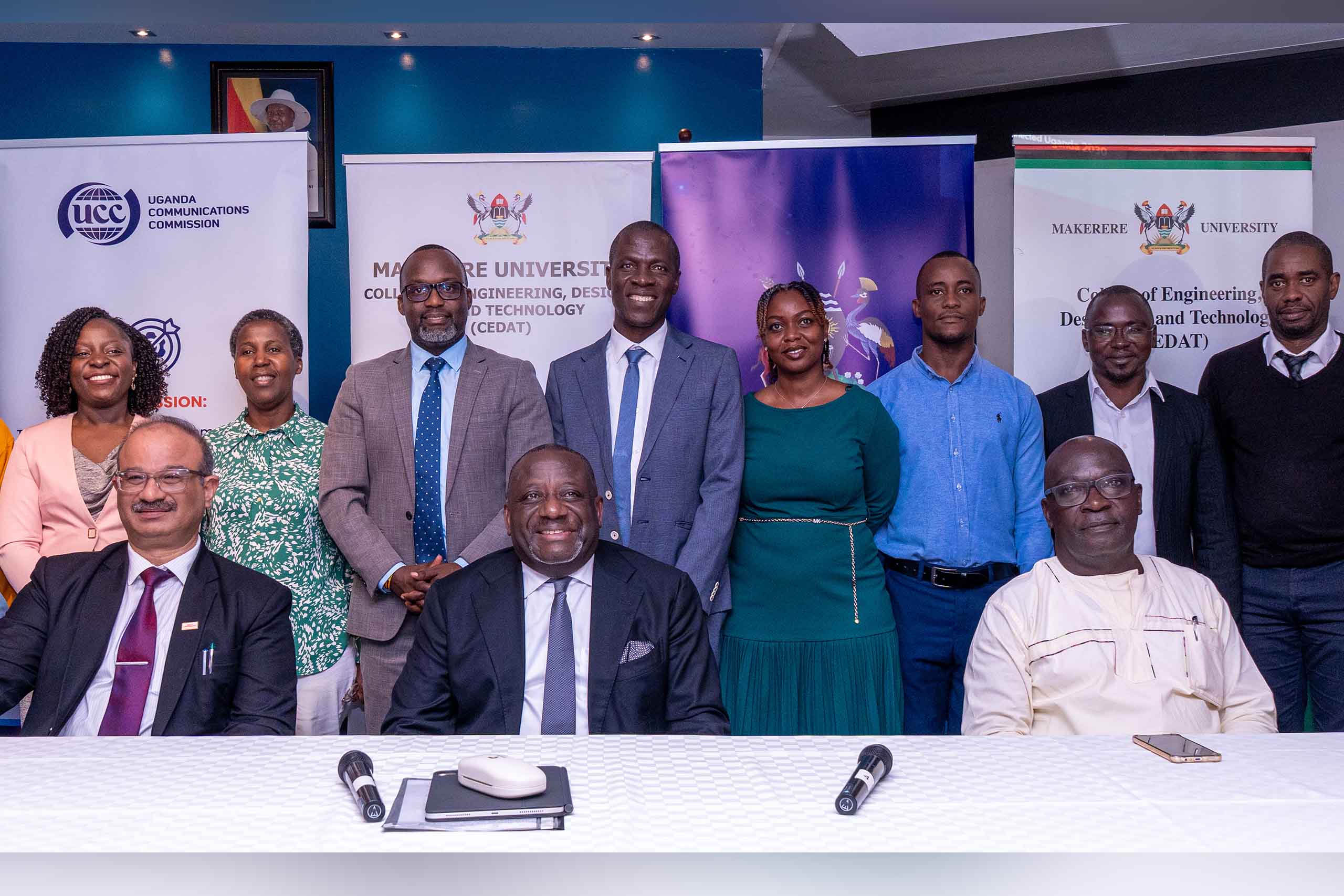
KAMPALA, April 16, 2026 – The Uganda Communications Commission (UCC) has officially launched the 10th edition of the National Conference on Communications (NCC 2026), reaffirming its commitment to advancing research, innovation, and collaboration within Uganda’s ICT ecosystem.
The launch, held on 16th April 2026 at the UCC Conference Hall, sets the stage for the annual flagship event that brings together academia, industry, government, and students to engage in dialogue on issues shaping the country’s digital future.

Speaking at the event, UCC Executive Director Nyombi Thembo described the NCC as a strategic platform for generating ideas, fostering partnerships, and promoting sustainable ICT development.
The NCC remains one of our flagship initiatives through which we stimulate innovation, foster collaboration, and promote sustainable ICT development in Uganda and beyond,” he said. “We firmly believe that communications research is central to unlocking homegrown solutions to today’s challenges and tomorrow’s opportunities.
The conference, scheduled to take place from 24th to 26th June 2026, will feature a comprehensive programme, including presentations of peer-reviewed research, policy and industry panel discussions, ICT startup showcases, and school-level innovation competitions.
This year’s theme, “Accelerating market-driven innovation for Uganda’s development,” underscores the need to align research and innovation with real-world challenges and economic priorities.
According to Nyombi Thembo, innovation must go beyond theory and respond directly to the needs of citizens, businesses, and institutions.
“The NCC provides a vital platform where ideas are not only generated, but also tested against industry realities, refined through collaboration, and positioned for scale,” he noted. “It is through such engagements that research translates into practical solutions that create jobs, improve services, and drive inclusive growth.”
He emphasised the importance of strengthening linkages between academia, industry, and government, noting that market-driven innovation thrives in ecosystems where collaboration and knowledge exchange are prioritised.
“NCC 2026 should serve as a bridge, connecting knowledge to opportunity, innovation to investment, and talent to impact, so that Uganda is not merely a consumer of technology, but a producer of solutions tailored to our development needs,” he added.
The Executive Director also commended Gulu University and ISBAT University for their successful partnership in hosting the 2025 edition of the conference, noting that their continued engagement reflects a strong and growing collaboration.

For the 2026 edition, UCC is partnering with the Makerere University College of Engineering, Design, Art and Technology (CEDAT), which has hosted five NCC editions in the past.
Associate Professor Kizito Maria Kasule, Deputy Principal of CEDAT, highlighted the significance of the conference as a national platform for ICT research and innovation. He acknowledged that Makerere University will be hosting the conference for the fifth time and emphasised the need to align innovation with market demands and national priorities, particularly under the National Development Plan (IV).
As scientists, researchers, academics, and innovators, we must remain focused on developing solutions to the complex challenges facing our society,” Nyombi said. “Whether through disruptive technologies or progressive policies, research remains the backbone of successful digital transformation.

In the lead-up to the conference, a masterclass for prospective authors began on 15th April 2026 at the new CEDAT building, Makerere University. The sessions are being facilitated by Dr. Dativa Tizikara and Dr. Swaib K. Kawaase and are aimed at equipping participants with the skills needed to prepare and submit high-quality research papers.
Through the National Conference on Communications – one of its flagship events – UCC reiterates its commitment to fostering a multi-sectoral approach to ICT development, bringing together academia, industry, government, and civil society to ensure that Uganda not only adopts technology but also develops and adapts it to meet local needs.
Related Posts