13th October 2026 Proliferation of unlicensed public Wi-Fi hotspot operations affects the integrity of Uganda’s…
Government officials tour downtown Kampala to assess ICT e-waste value chain
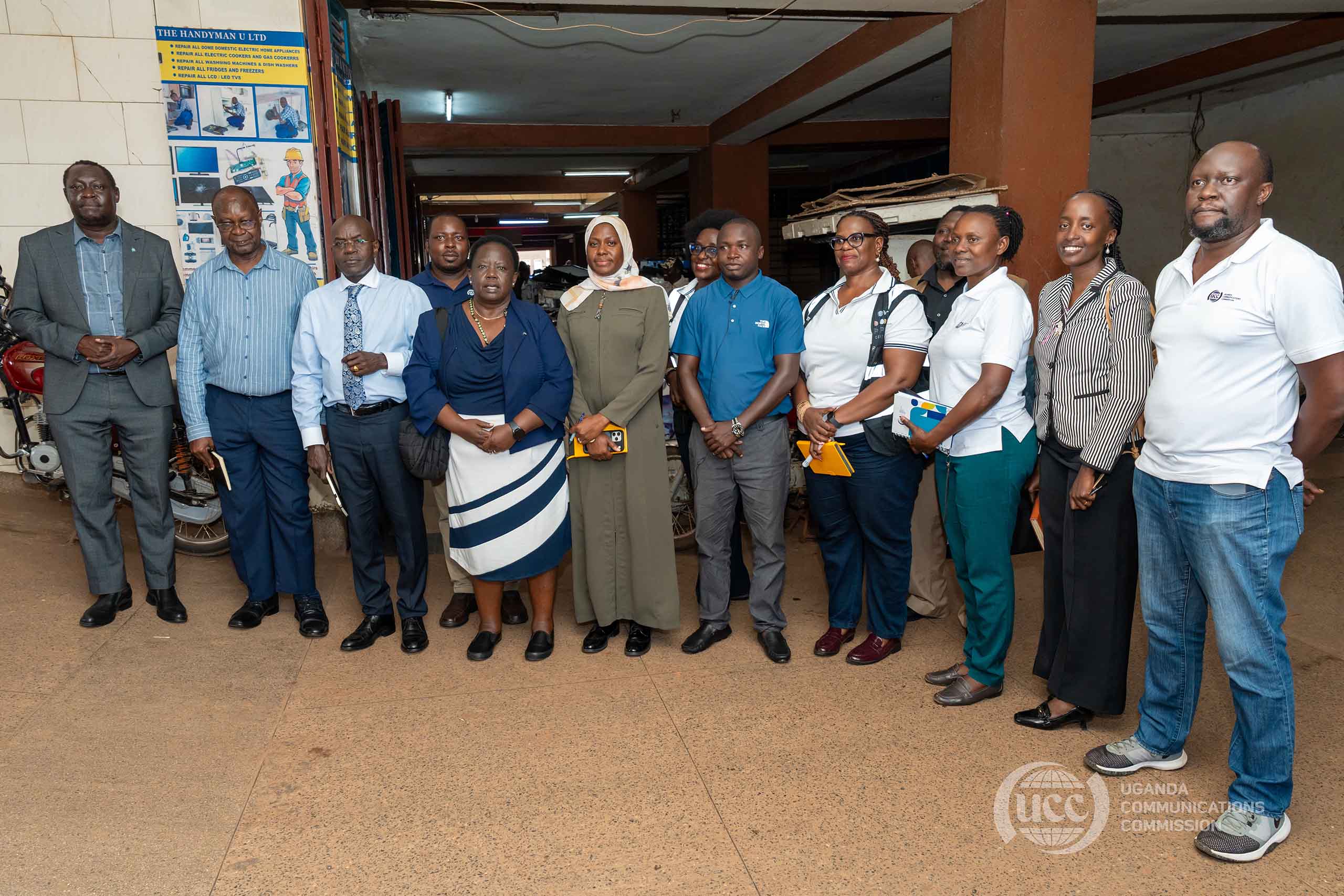
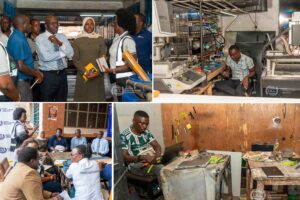
KAMPALA, April 13, 2026 — The Uganda Communications Commission has convened a high-level, multi-sectoral engagement on ICT e-waste management, bringing senior government officials to downtown Kampala’s Cornerstone Plaza – a key hub for informal collection, repair, and refurbishment of electronic devices.
The visit was led by the Permanent Secretary at the Ministry of ICT and National Guidance, Dr Aminah Zawedde, and brought together representatives from the Ministries of Lands, Housing and Urban Development; Works and Transport; and the Office of the Prime Minister. The engagement reflects a whole-of-government approach to addressing the growing challenge of electronic waste in Uganda.
The tour offered an on-the-ground perspective of the ICT e-waste value chain, demonstrating how devices move through extended lifecycles – from repair and refurbishment to eventual disposal. It highlighted the critical role played by technicians and informal sector actors, often referred to as “wastepreneurs,” who form the primary entry point into the e-waste ecosystem.
Key insights from the engagement reaffirmed that while significant value is retained through reuse and refurbishment, there remains a major gap in the safe handling of end-of-life, non-repairable devices. These items often fall outside formal systems and are disposed of alongside general waste, posing environmental and public health risks.
Discussions focused on practical interventions to strengthen the ecosystem, including capacity building for technicians, provision of appropriate protective equipment, skills development and certification, and the establishment of structured pathways for safe final disposal.
The engagement builds on findings from UCC’s ICT e-waste collection pilot project, launched last year to improve awareness and promote responsible disposal practices. It also feeds into ongoing efforts to strengthen national policy frameworks, including the review of the National Electronic Waste Management Policy.
Speaking earlier, during the launch of the pilot, Dr. Zawedde emphasised that while Uganda has made significant strides in ICT adoption, driven by liberalisation and increased access to digital tools, this progress has also led to rising volumes of electronic waste. She noted that e-waste contains hazardous substances such as lead, mercury, and cadmium, which pose serious risks to human health and the environment if not properly managed.
At the same time, she highlighted the opportunities presented by effective e-waste management, including environmental protection, job creation, and advancement of a circular economy in line with Uganda’s development agenda.
Uganda has already taken steps to address the challenge, including the development of the National Electronic Waste Management Policy and the establishment of a national e-waste management centre in Kampala by the National Environment Management Authority (NEMA) in partnership with the National Enterprise Corporation (NEC).
Through coordinated action, sustained awareness, and strengthened stakeholder engagement, the government vision is a structured, scalable, and environmentally sound ICT e-waste management system that protects public health, supports innovation, and contributes to a sustainable digital future for Uganda.
Related Posts