13th October 2026 Proliferation of unlicensed public Wi-Fi hotspot operations affects the integrity of Uganda’s…
UCC Leaders Engage Experts on Satellite Communications and Regulatory Preparedness
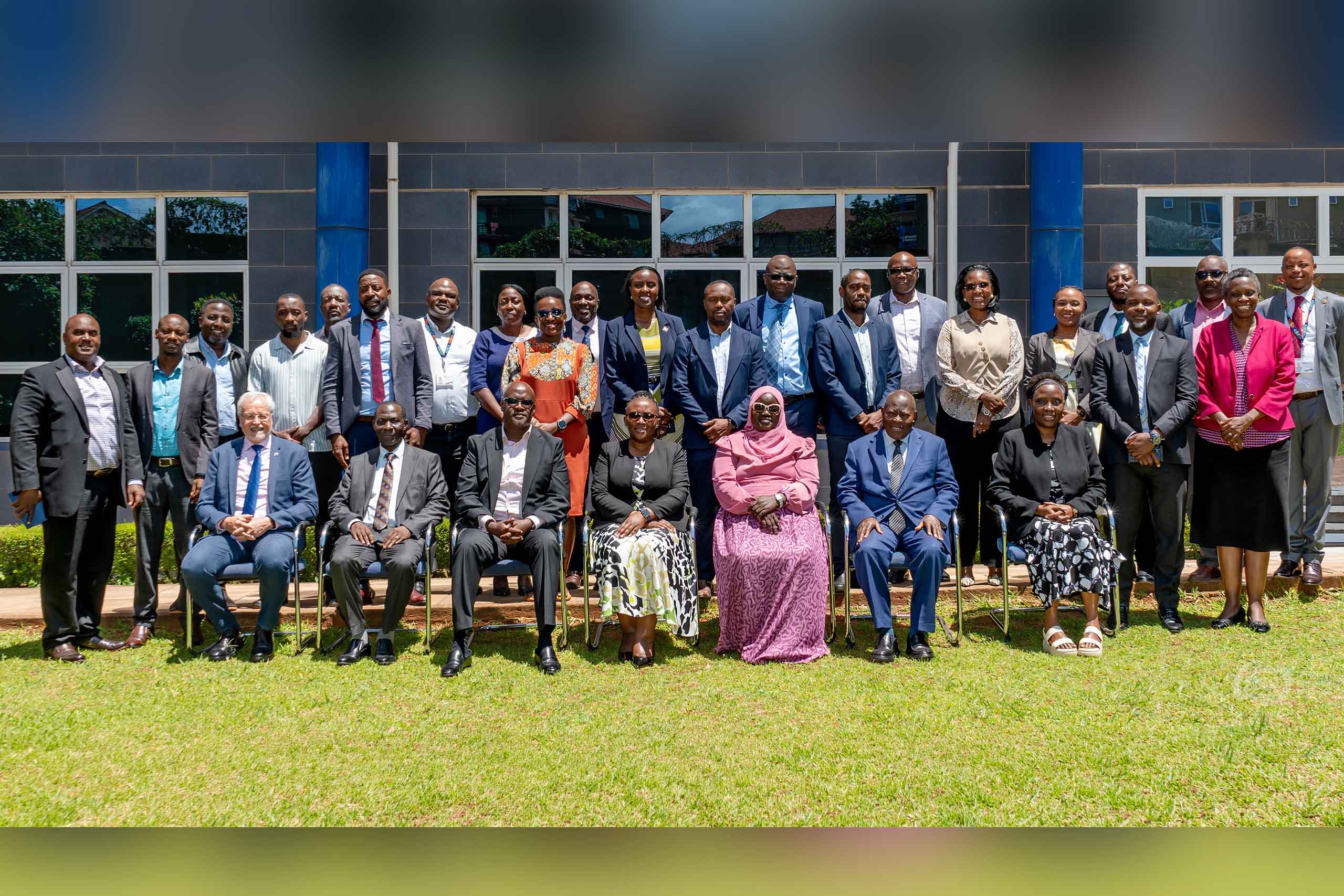
KAMPALA, April 10, 2026 – A landmark seminar on the growing intersection of ICT policy, regulation, and satellite communications has concluded at the Uganda Communications Commission with a call on the UCC leadership to deepen their understanding of emerging trends and enhance regulatory preparedness in a rapidly evolving sector.
The three-day leadership brought together Board members, top management, and external experts in the UCC conference hall at Bugolobi to reflect on the growing intersection of ICT policy, regulation, and satellite communications—an area increasingly critical to the Commission’s mandate and future direction.
With the global satellite industry generating over USD 108 billion in 2024, discussions facilitated by experts such as Patrick Masambu, the former UCC Executive Director and Director General of the International Telecommunications Satellite Organisation (ITSO), highlighted Uganda’s current position as largely a consumer within this value chain.
Participants explored how new technologies, particularly Low Earth Orbit (LEO) satellite systems such as Starlink, are transforming broadband access by extending connectivity to underserved and remote areas, while also entering markets traditionally served by terrestrial providers.
The seminar further examined the opportunities these innovations present for sectors such as education, healthcare, and agriculture, alongside the complex regulatory considerations they introduce. Key issues discussed included licensing frameworks, spectrum management, competition, consumer protection, and data governance.
Emphasis was placed on UCC’s critical role in managing finite resources such as radio frequency spectrum and orbital slots, in line with international obligations. Overall, the engagement underscored the need for forward-looking, balanced regulatory approaches that foster innovation while safeguarding national interests.
Speaking at the opening of the seminar on Wednesday, both the Board Chairperson Dr Charity Basaza Mulenga and the Executive Director Hon Nyombi Thembo spoke of the need for regulators to stay ahead or at par with technological advances, hence the necessity of learning, relearning and unlearning.

Speaking at the opening of the seminar on Wednesday, the Board Chairperson, Dr. Charity Basaza Mulenga, and the Executive Director, Hon. Nyombi Thembo, emphasised the need for regulators to stay ahead of—or at least keep pace with—rapid technological advancements, underscoring the importance of continuous learning, relearning, and unlearning.
The Executive Director explained that the rationale for convening the seminar was clear: technology is evolving at an unprecedented pace, making it imperative for UCC’s leadership to remain not only responsive, but forward-looking. He noted that the seminar was designed to provide a platform for the Board and top management to engage with external subject-matter experts on both current and emerging issues in satellite communications.

“Our objective is to equip ourselves with the knowledge, insights, and perspectives necessary to strengthen telecom regulatory governance in Uganda,” he said.
Addressing growing public interest in satellite technologies such as Starlink, the Executive Director highlighted how Low Earth Orbit (LEO) satellite constellations are reshaping the telecommunications landscape. He explained that these systems are redefining broadband access by extending high-speed connectivity to underserved and remote areas, which have traditionally been difficult and costly to reach using terrestrial infrastructure.
For countries like Uganda, where extending fibre and backbone infrastructure to sparsely populated areas remains expensive, such technologies present significant opportunities while complementing existing networks. However, he cautioned that these advancements also introduce complex regulatory considerations.
Commenting on Starlink’s expression of interest in entering the Ugandan market, the Executive Director noted that while the potential benefits are clear, UCC must carefully assess key issues. These include the impact on existing licensed operators and market competition, the suitability of licensing frameworks, spectrum management, consumer protection, quality of service, affordability, as well as data governance, security, and national sovereignty.
“Our task is to strike a careful balance, facilitating innovation and investment while ensuring a level playing field and safeguarding national interests,” he said.
He further observed that Uganda is not alone in navigating these challenges, as regulators worldwide are grappling with the implications of rapidly evolving satellite technologies. This, he noted, calls for regulatory frameworks that are not only responsive but forward-looking.

The Executive Director also highlighted UCC’s central role in the satellite ecosystem, noting that all space-based systems rely on radio frequency spectrum and orbital positions, which are all finite natural resources that must be carefully managed. He explained that their governance is anchored in the Radio Regulations of the International Telecommunication Union (ITU), with UCC mandated at the national level to ensure their equitable, efficient, and sustainable use.
He described the seminar as both timely and relevant, providing a valuable opportunity to engage experts on critical issues such as spectrum management, orbital resource allocation, licensing frameworks, and the broader dynamics of the space economy.
In her remarks, Dr. Mulenga placed the seminar in a broader global context, referencing the recent Artemis II mission, which has captured worldwide attention. She noted that such milestones are the result of decades of deliberate investment, policy direction, scientific inquiry, and regulatory evolution.
Drawing a parallel to Uganda, she emphasised that the country’s journey into the space and satellite domain must begin now, starting with building a strong understanding of the underlying technologies and establishing a supportive policy and regulatory environment.
“And it begins with building a solid understanding of the technologies that underpin space science, particularly satellite communications, as well as developing a friendly policy and regulatory environment to facilitate such development,” she said.
Related Posts