KAMPALA – December 15, 2025 – Uganda Communications Commission (UCC) has released the Annual Communications…
UCC at Media Week: Independent journalism too important to fail

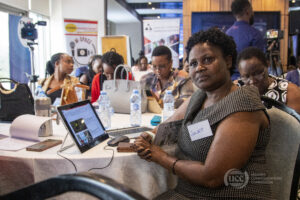
KAMPALA, December 17, 2025 – A key highlight of the 7th Uganda Media Week Meeting was the open and candid engagement between the regulator and the Ugandan media fraternity.
Organised by Media Focus on Africa in partnership with the African Centre for Media Excellence (ACME), the two-day Media Week dialogue took place at Four Points by Sheraton in Kampala, starting from December 17-18, 2025.
Bringing together journalists, media trainers, academics, civil society organisations, and other stakeholders, the event plays a vital role in strengthening collaboration, dialogue, and collective problem-solving around the challenges facing Uganda’s media industry.
This year’s theme, “Building Resilience and Safeguarding Independent Journalism,” speaks directly to the growing pressures confronting the profession and seeks practical, sustainable responses. It underscores our shared commitment to promoting and protecting the indispensable role of journalism in a young and evolving democracy such as Uganda.
Mr. Fred Otunnu, who represented the Executive Director of the Uganda Communications Commission, took to the podium not as an ombudsman of the airwaves, but as a partner in a profession that is currently navigating a digital hurricane, among other challenges.
Substantively the Director of Corporate Affairs, Mr. Otunnu confronted the persistent yet skewed perception of UCC as the stern outfit waiting to flick the off switch, turning this view on its head.
He spoke of an accommodative regulatory environment where UCC has opted for understanding and collaboration over heavy-handedness. “If we went by the letter of the law, we would have no FM stations,” he noted.
The regulator, he explained, recognises that Uganda is a growing democracy and that our people need information more than they need perfect paperwork. However, the grace period isn’t eternal. News media organisations need to put their houses in order to continue performing their important role as the fourth estate, Mr. Otunnu said.
In an era where anyone with a smartphone and a TikTok account can masquerade as a reporter, Mr. Otunnu threw down the gauntlet: Citizen journalism is great for democracy, but it’s the professional, trained journalist who remains the anchor.
You might encounter a rumor on social media at noon, but you’ll also want to wait for the 7:00PM news to verify it. The thorough process of verification and gatekeeping is what makes traditional media an asset. It’s why journalism is a public good, and not just a private hobby.
The question of Facebook’s closure by the Uganda Government came up—as it always does. The response was clear: tech platforms are not immune to the laws and norms of the countries they operate in. While the official gate remains closed, the dialogue channel is open and ongoing. There remains optimism that a breakthrough will come.
As elections draw closer, Mr. Otunnu urged journalists to remember the immense power they hold and to use it judiciously. He also touched on the painful reality of low pay for journalists. A truly independent media cannot exist if the practitioners are economically vulnerable, he said.
Mr. Otunnu ended with a commitment to continue supporting the work of media partners such as ACME and Media Focus on Africa, saying rather succinctly, that “independent journalism is simply too important to be allowed to fail.”
Related Posts