13th October 2026 Proliferation of unlicensed public Wi-Fi hotspot operations affects the integrity of Uganda’s…
Advancing Evidence-Based Regulation Through ICT Access and Usage Study
KAMPALA, June 25, 2026 -How do individuals, households, businesses and institutions in Uganda access and use Information and Communication Technologies (ICTs), including telecommunications, internet, broadcasting, postal services and digital financial services?
This question has become increasingly important as Uganda’s digital economy continues to expand. To find answers, the Uganda Communications Commission (UCC) commissioned AOT Consulting Ltd to undertake a comprehensive study on access to and usage of communication services across the country.
The study explores critical thematic areas, including affordability, quality of service, digital inclusion, cybersecurity, online risks, and other barriers to ICT adoption.
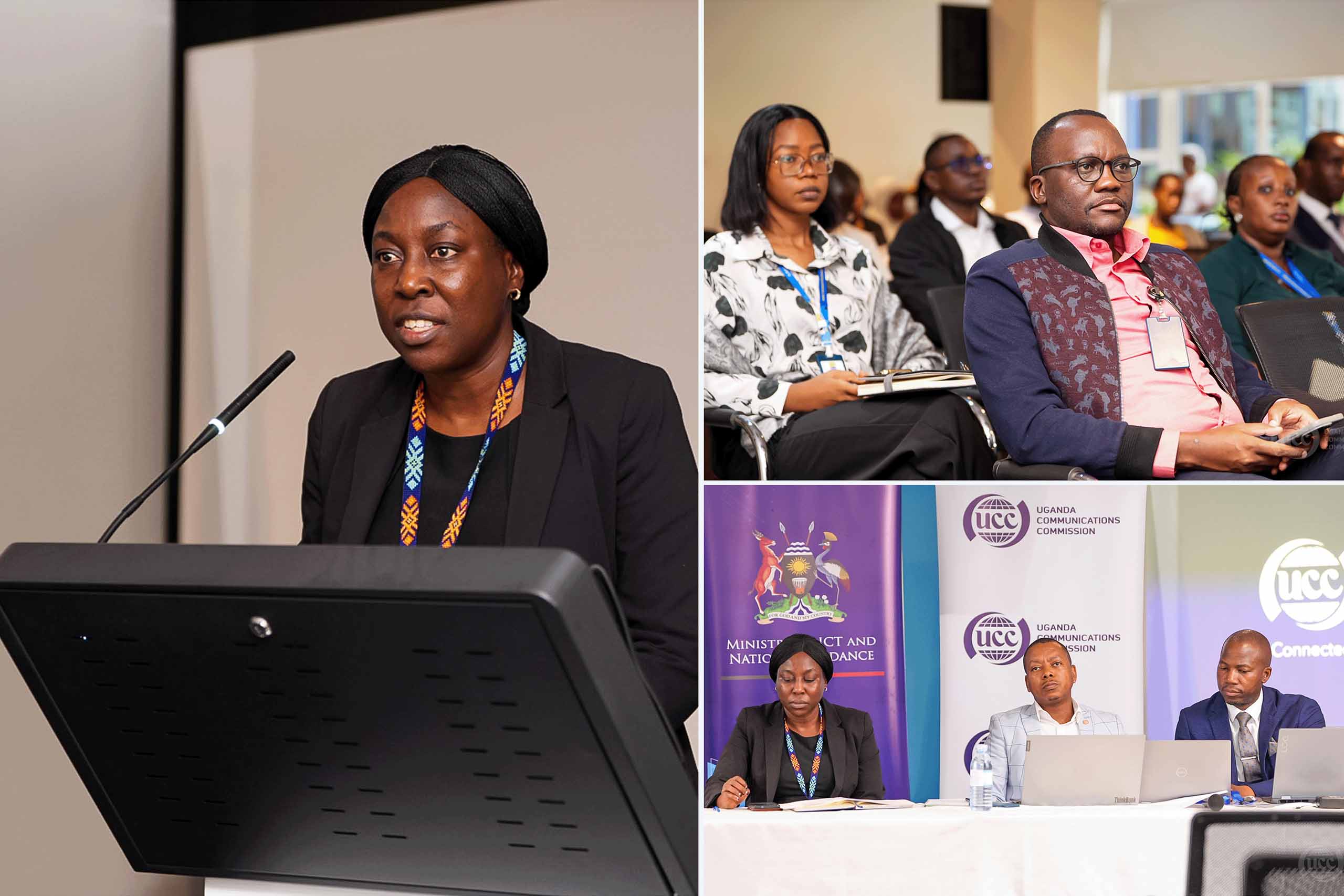
On Thursday, at UCC’s headquarters in Bugolobi, the consultant presented preliminary findings during a validation workshop organised by the Commission. The findings provide a comprehensive evidence framework for understanding Uganda’s digital transformation journey, highlighting both the significant progress made and the persistent inequalities in access, usage and meaningful connectivity.
The study forms part of UCC’s broader commitment to evidence-based regulation, policy formulation and strategic planning aimed at achieving inclusive, affordable and meaningful digital connectivity for all Ugandans.
Section 5(l) of the Uganda Communications Act, 2013 mandates the Commission “to promote research into the development and use of new communications techniques,” particularly those that enhance access to communications services for persons with disabilities and other marginalised members of society.
In fulfilment of this mandate, UCC established the Department of ICT and Research to spearhead research and generate evidence to inform regulatory interventions, policy decisions and sector development initiatives.

Earlier in the week, the Commission also conducted a separate validation exercise on preliminary findings from the National ICT in Education Survey. The survey represented Uganda’s first nationally representative evidence-based assessment of ICT integration across the country’s 52,630 primary and secondary schools, providing an empirical foundation for strategic investment and policy reform in the education sector.
While the education survey focused specifically on schools, Thursday’s validation workshop examined access to and use of communication services among individuals, households, businesses and institutions across Uganda.
The workshop sought to provide stakeholders with an opportunity to review, validate and contextualise the preliminary findings, strengthen the credibility and relevance of the results, and provide feedback to enrich the final report.
Participants included representatives from government ministries, departments and agencies such as the Uganda Revenue Authority, Makerere University, the National Planning Authority, the Financial Intelligence Authority and the Uganda Broadcasting Corporation. Also represented were mobile network operators, including Airtel Uganda and Uganda Telecommunications Corporation Limited (UTCL), internet service providers, the National Association of Broadcasters, and other key ICT sector stakeholders.
Speaking on behalf of the Director of ICT and Research, Ms Rebecca Mayanja, Head of Research at UCC, underscored the importance of demand-side data in shaping Uganda’s digital future.
She noted that while supply-side data from service providers remains valuable, it does not fully capture how Ugandans actually access, use and experience communication services in their everyday lives.
Mayanja highlighted encouraging trends, including increased use of mobile internet, widespread adoption of digital financial services, and growing utilisation of digital tools by businesses and institutions. However, she cautioned that these gains remain uneven.
“Many Ugandans continue to face barriers such as high internet costs, unaffordable devices, limited digital skills, unreliable electricity access and online safety risks,” she observed.
She emphasised that meaningful connectivity goes beyond merely being connected, noting that digital services must also be affordable, reliable, safe and relevant to users’ needs. She called upon all stakeholders to actively contribute to the validation process.
The study, conducted using Computer-Assisted Personal Interviewing (CAPI), collected data from households, individuals, businesses and institutions across Uganda to assess access to and usage of communication services.
Preliminary findings revealed low levels of computer ownership, increasing reliance on mobile phones and mobile money services, and persistent barriers such as poverty, limited affordability, inadequate digital skills, poor network coverage and limited access to electricity.

During the validation exercise, stakeholders recommended broader consideration of the total cost of ICT usage, including expenditure on devices, electricity and other associated costs, in addition to service charges. They also called for improvements in research methodologies, enhanced coverage of broadcasting services, stronger infrastructure coordination, and greater attention to emerging issues such as youth participation, social media enterprises and artificial intelligence.
The exercise forms part of UCC’s ongoing efforts to ensure that national ICT planning and regulation are informed by robust evidence and grounded in the lived experiences of Ugandans.
Ultimately, the findings will support ongoing initiatives to strengthen Uganda’s digital ecosystem, enhance cybersecurity awareness, and promote the safe, inclusive and effective use of ICT services in both urban and rural communities.
Related Posts