
September 22, 2026: UCC’s Uganda Computer Emergency Response Team (UgCERT), with support from the Forum…
Ssengooba Re-elected as PAPU Conference Closes on High Note for Uganda
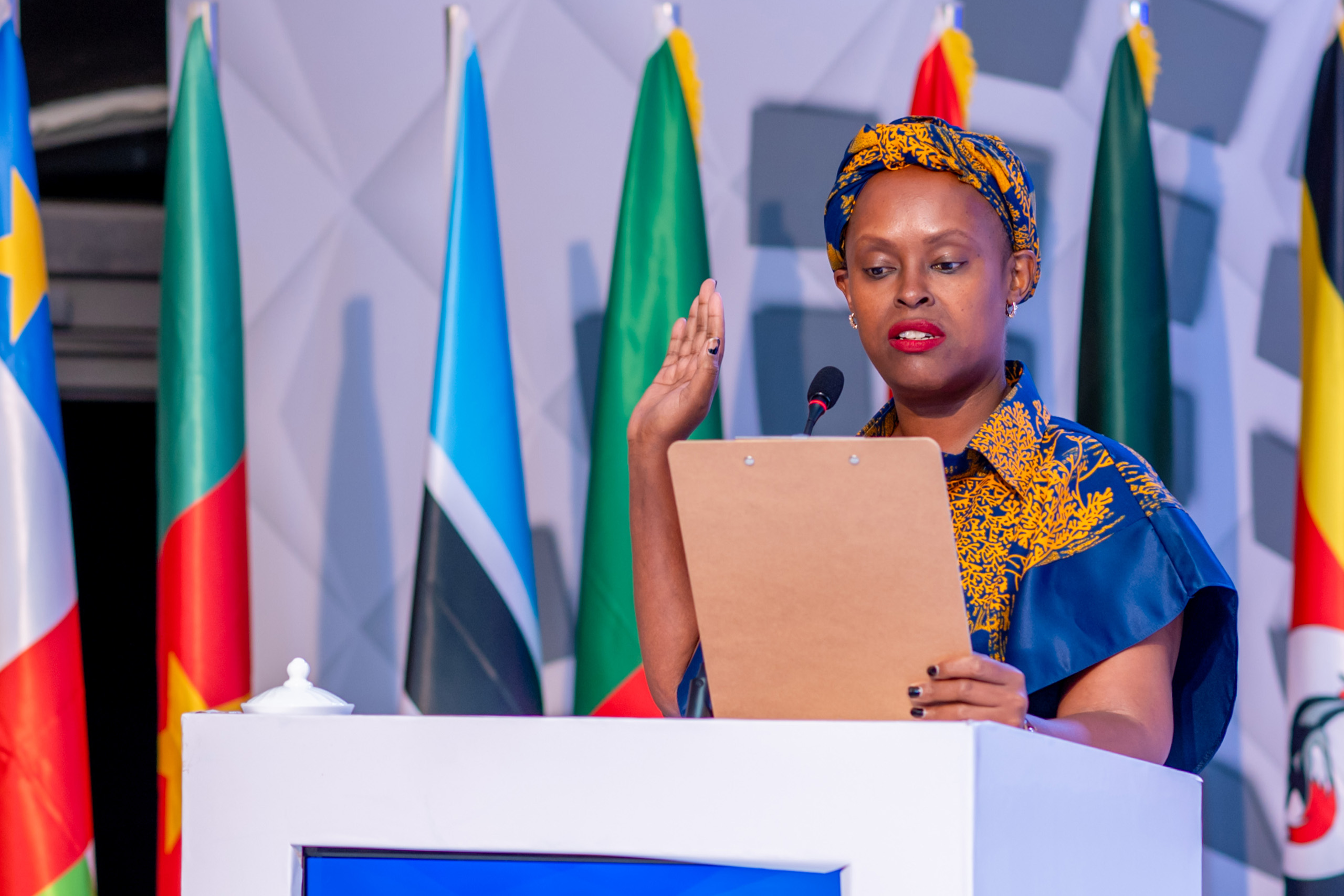
KAMPALA, March 28, 2026 – Uganda’s Jessica Hope Ssengooba was on Friday night re-elected Assistant Secretary General of the Pan African Postal Union (PAPU), capping a hard-fought contest and bringing a triumphant close to the 11th Ordinary Session of the Plenipotentiary Conference held in Kampala.
The two-week conference, which brought together policymakers, regulators, and industry leaders from across Africa, formally concluded on Saturday after intensive deliberations on the future of the continent’s postal sector in an increasingly digital economy.
A central task of the Plenipotentiary Conference, which is held every four years, is to renew the leadership of the Secretariat, notably the Secretary General and Assistant Secretary General, as well as to reconstitute the Administrative Council.
With the incumbent Secretary General, Sifundo Chief Moyo of Zimbabwe, returned unopposed, the spotlight was on the position of Assistant Secretary General, where Uganda’s Jessica Hope Ssengooba faced a strong challenge from Senegal’s Bassirou Wade.
In the end, it was a tight contest that kept the delegates on edge. After the first round of voting, Ssengooba secured 14 votes against her opponent’s 8 – just one vote short of the required threshold. Two subsequent rounds of voting yielded the same outcome, prolonging the suspense. The race was ultimately decided by simple majority vote, triggering jubilant celebrations among Ugandan delegates and supporters.

Her victory marked one of the defining moments of a conference that was not without challenges. Proceedings on Friday were particularly tense, with delegates grappling with quorum and other procedural issues. The outgoing chairperson, Zimbabwe’s Minister of ICT, Postal & Courier Services, Tatenda Annastacia Mavetera, would later on acknowledge the difficulty of managing the charged deliberations.
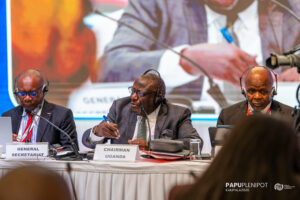
When Nyombi Thembo, representing Uganda’s ICT Minister, assumed chairing duties, he too faced the tough task of steering the conference through the impasse. He later noted that extraordinary measures were required to keep proceedings on track and ensure the conference delivered on its objectives within the limited time available.Despite these hurdles, the conference successfully fulfilled its core mandate, including the election of PAPU’s top leadership and the reconstitution of its Administrative Council – where Uganda assumed membership as one of the representatives of the East African region.
The Plenipotentiary Conference followed the 44th Ordinary Session of the PAPU Administrative Council, a two-day meeting that helped set the stage for the final deliberations. Together, the two assemblies formed a central feature of the broader conference programme, which ran from March 16 to 28 at the Lake Victoria Serena Golf Resort and Spa in Kigo. The opening week had featured meetings of technical and administrative committees, covering operations, technology, policy, and regulatory matters.
The Plenipotentiary Conference is PAPU’s supreme policy-making organ. It brings together Africa’s ministers responsible for postal services, regulators, operators, and development partners to review progress, adopt policies and strategic programmes, and to elect the Union’s leadership.
This year’s conference attracted more than 300 delegates and was notable for the admission of Mauritania as a new member, bringing the Union’s membership to 46 countries. The event was hosted by the Ministry of ICT and National Guidance in collaboration with the Uganda Communications Commission (UCC) and Posta Uganda.
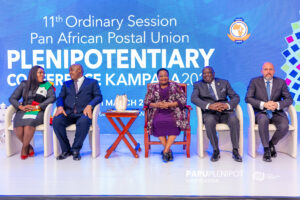
Uganda’s Prime Minister, Robinah Nabbanja, officiated at the opening ceremony on March 25, alongside ICT Minister Chris Baryomunsi and other senior government leaders. The ceremony also featured a keynote address by Osvald Marjan, the Deputy Director General of the Universal Postal Union (UPU), the global body responsible for coordinating international postal services.
The conference was held under the theme:
Leveraging Digital Technology and Innovation to Create a Smart Postal Sector in Africa: Unlocking Opportunities to Strengthen the African Postal Sector for Boosting Regional Integration.
This theme reflects the evolving role of postal services in a digital era increasingly shaped by e-commerce, logistics, and financial services.
Over the course of the two weeks, delegates deliberated on a wide range of policy and operational issues, including the digital transformation of postal services, strengthening cross-border e-commerce, and harmonising postal legislation across African countries. Discussions also focused on mobilising investment and creating new revenue streams for postal operators as they adapt to declining traditional mail volumes and rising demand for parcel delivery and digital services.
A key outcome of the conference was progress toward the development of a Pan-African Postal Digital Framework, aimed at enabling interoperable systems to support secure communications, e-government services, and efficient cross-border logistics. These deliberations contributed to shaping the roadmap for implementing the PAPU Africa Strategy 2026–2030.
Uganda, a member of PAPU since 1980, has played an active role in the Union’s governance and technical work. Hosting the conference provided an opportunity for the country to reinforce its leadership profile within Africa’s postal and communications ecosystem, while positioning itself as a regional hub for postal, courier, e-commerce, and digital trade services.

Ssengooba’s re-election for the 2026–2030 cycle, having first been elected at the 2021 Plenipotentiary Conference in Victoria Falls, Zimbabwe, was widely seen as a major highlight and a vote of confidence in Uganda’s contribution to the Union.
As the curtains fell after a demanding final day, delegates gathered for a lake-side celebratory dinner hosted by South Africa. Here, the formal atmosphere gave way to African music, dance, food and drink, marking not just the end of a rigorous conference, but the beginning of a new chapter in Africa’s postal story.
Related Posts