
September 22, 2026: UCC’s Uganda Computer Emergency Response Team (UgCERT), with support from the Forum…
STUDY VALIDATES ENERGY USE AND ENVIRONMENTAL IMPACT OF UGANDA’S TELECOM SECTOR
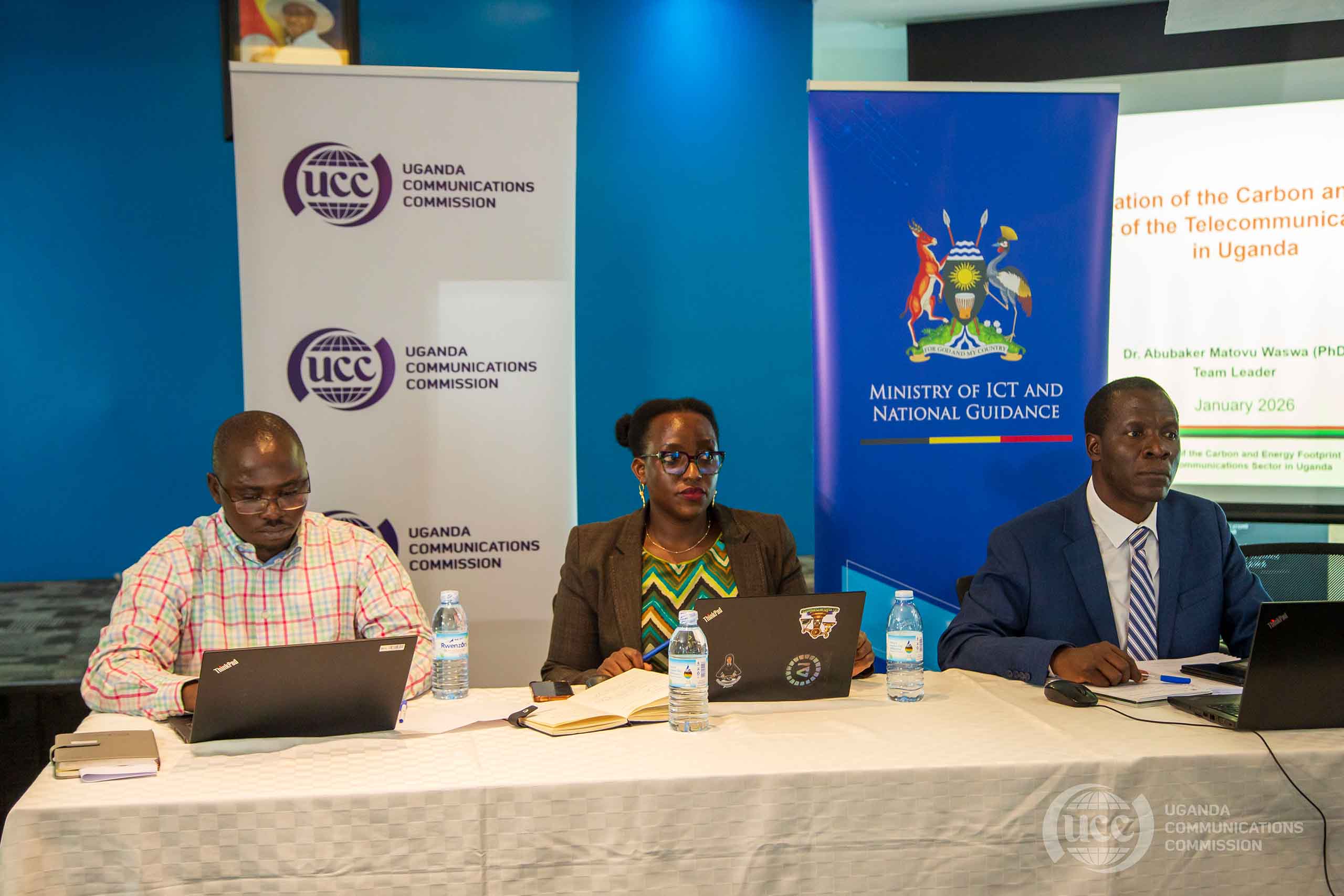
KAMPALA, 29 January 2026 — The Uganda Communications Commission (UCC), through its IT and Research Department, convened a validation workshop on the Evaluation of the Carbon and Energy Footprint of Uganda’s telecommunications sector, bringing together key stakeholders to review and refine findings from a sector-wide study.
Held at the UCC head office in Bugolobi, the workshop engaged participants on the outcomes of the study conducted by a consultancy team from the College of Engineering, Design, Art and Technology (CEDAT), Makerere University, led by Dr. Abubaker Wasswa.

The study was commissioned by UCC to establish a clear, evidence-based understanding of how much energy the telecommunications sector consumes, where that energy is used, and the resulting environmental implications. As demand for connectivity continues to grow, the expansion of telecom networks, offices, data centres, and backup power systems has led to rising energy use and increased dependence on fuel-based power sources, with direct consequences for carbon emissions. The study seeks to guide the sector towards cleaner, more efficient operations while supporting sustainable growth.

The consultants applied a structured and practical methodology, involving a review of existing policies and international best practices, engagement with telecom operators and other stakeholders, site visits to selected facilities, and comparative analysis with experiences from other countries.
The study is expected to provide a baseline assessment of the sector’s energy use and environmental footprint, identify priority areas for intervention, and propose practical, phased recommendations, including a roadmap to guide the sector towards more sustainable and energy-efficient operations.
During the validation workshop, the consultant presented key findings and insights, highlighted priority intervention areas, and shared proposed recommendations and implementation pathways. Participants provided feedback aimed at strengthening the final study outputs, ensuring that the findings are both technically sound and practically applicable to Uganda’s telecommunications landscape.
Related Posts